Note: This page includes content from the Integrated Report 2026.
Human Capital Management That Drives Sustainable Value Creation
Completed the doctoral program at the Graduate School of Business Administration, Kobe University in 2009, and received a Ph.D. in Business Administration. After working at Shiga University and Yokohama National University, he became an Associate Professor at the Graduate School of Business Administration of Kobe University in 2018. He has been in his current role since 2023. His research interests center on human resource management and organizational behavior.
His main published works include Saiyogaku (“Recruitment Studies”), which was published by Shincho Sensho in 2016, and Soshiki Kodo Ron no Kangaekata, Tsukaikata: Ryoshitsu no Ebidensu wo Te ni Suru Tame ni (“Rethinking organizational behavior: How we think and how to use it.”), which was published by Yuhikaku in 2020. He has received awards such as the Academic Association for Organizational Science’s Takamiya Award in June 2022, and the HR award (the top prize in the book category) hosted by Nihon no Jinjibu in October 2025.
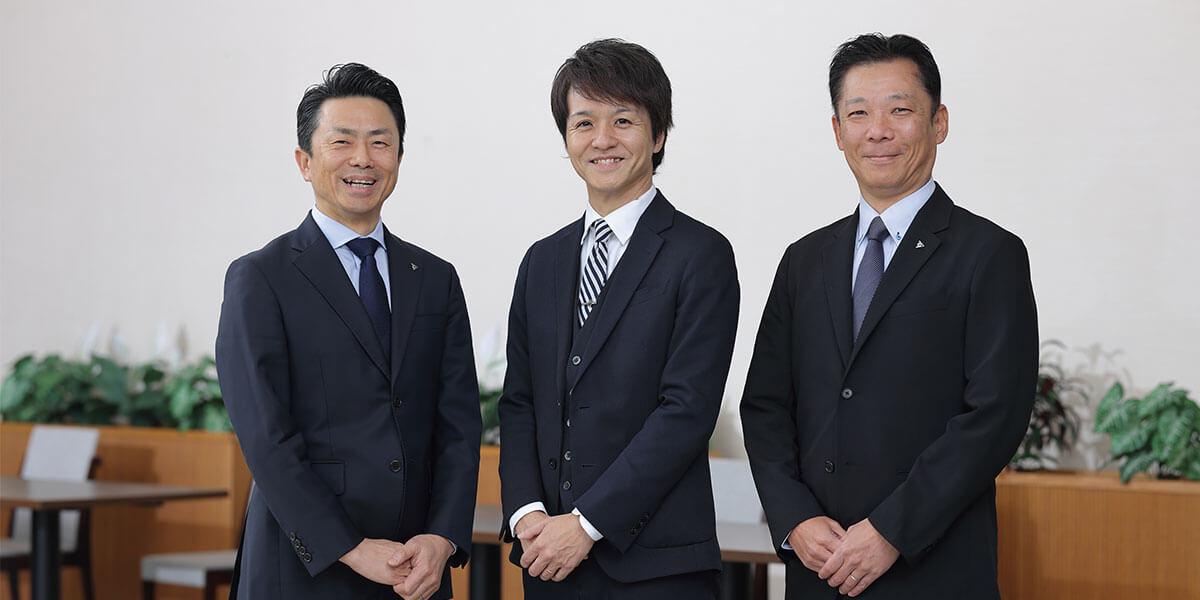
With human capital management garnering attention as an important source of corporate value, putting it into practice has become a key theme for us as well. In this session of Expert Roundtable, a discussion was held concerning approaches to talent and organizations serving to drive improvements in corporate value, centered on the initiatives in the Long-Term Corporate Strategy “R.I.S.E. 2035.” The discussion was based on both academic perspectives and views from the front lines and corporate management.
Hattori
First of all, when it comes to the background behind why human capital management is being valued, I would say that there are two main trends. One is changes in the business environment. Rather than relying solely on collective organizational strength as in the past, business globalization has made the capabilities, knowledge, and experience of both individuals and organizations increasingly important. One more trend is that capital markets and labor markets are now looking at things with much more scrutiny. The ideal forms of human resource development and utilization are directly tied to the assessment of corporate value.
From an academic point of view, this situation developed with management at Japanese companies going back and forth between soft management style (mindsets rooted in providing guidance to fellow team members through trusting relationships with organizations and individuals and the nurturing of interpersonal relationships) and hard management style (mindsets rooted in managing and controlling team members using numerical figures and KPIs). Roughly speaking, traditional Japanese companies value the former and Western companies value the latter. Meanwhile, the characteristics of the form of current human capital management are found to be a synthesis of the two. It can be said that the current form involves a layered model combining soft and hard management approaches, wherein the deployment of personnel, their development, the visualization of their results and the subsequent results using numbers, is built on a foundation where value is placed on individuals and interpersonal relationships.
Tokumo
In the past, our company has grown by steadily providing highquality products while moving forward with expansion overseas and increasing the scale of its market, but due to changes in the business environment, it has become increasingly difficult over the past decade to improve business performance through conventional methods.
In this environment, we feel that there is a need to shift to a more strategic and people-centered approach to human capital management, which has us returning to the concept of “people are our most important asset” as laid out in the Sumitomo Business Philosophy and placing value on people, in addition to figuring out where to make investments and where we can produce results.
In addition, as our business sectors and geographic footprint continue to diversify, it is essential to allocate human capital strategically rather than evenly across all areas. To be specific, there are three items we are focusing on: (1) the enhancement of global human resources and organizations, (2) the visualization of productivity and roles from the perspective of ROI for human capital, and (3) the re-strengthening of our factories in Japan. Based on these elements, we want to go about further refining a kind of management which involves investments in people, which is in line with the statement made by our new president Mr. Kuniyasu to the effect that people are our greatest asset.
Hakoshima
Right now, the competition is fierce, and we currently find ourselves in a business environment where hard approaches are required, wherein productivity improvements and cost reductions are thoroughly undertaken. Meanwhile, at DUNLOP, we are placing importance on value consisting of both the trust and peace of mind supported by careful manufacturing characteristic of Japanese companies.
The qualities of “integrity and sound management,” which we have prioritized as part of the Sumitomo Business Philosophy, have become instilled in the operations on the shop floor. As a result, I am seeing quality improvement proposals being actively submitted each time I pay a visit to a site. Employees of our company face their work with sincerity each day and I think they are outstanding. Through the development of people and the manufacturing of goods, I would like to see us further improve upon the DUNLOP brand, which is supported by the qualities of “integrity and sound management.” We cannot differentiate ourselves by simply competing on cost or through the mere management of numerical figures.
Hattori
Mr. Hakoshima, you bring up an important point. It’s not just about competencies and skills; what makes a company competitive also includes elements that encompass attitudes and mindsets reflected in employees’ engagement with their work. There exists value that cannot be guaranteed by ability alone. Articulating that and consciously refining it is the essence of human capital management.
Hattori
Recently, we have increasingly heard language that emphasizes care for frontline employees, such as one-on-one meetings and employee engagement. However, from the perspective of employees, many of these practices are sometimes perceived less as support and more as a form of close monitoring and control. Control itself is not necessarily the problem. Rather, the issue arises when there is a gap between the language being used and employees’ lived reality, because people are highly sensitive to such inconsistencies.
What concerns me is the potential emergence of a culture of silence within organizations. When employees’ dissatisfaction remains unspoken and they continue to suppress rather than accept their circumstances, organizations risk drifting into cynicism and emotional disengagement, creating a colder organizational climate. Preventing the emergence of such silent and cynical climates is, in my view, one of the central challenges of human capital management.
Tokumo
You are truly right about that. Until now, our Company has demonstrated strong execution skills by having everyone in the organization come together as one based on the will of top management; however, we are currently in the midst of environmental changes which mean that business cannot be undertaken based on that approach alone. In recent years, under the “Be the Change” project, we have moved forward in rapid succession with measures aimed at changing our organizational culture through initiatives such as the 360-degree feedback and 1-on-1 meetings. All of them constitute important initiatives, but challenges do remain when it comes to the extent to which these initiatives click with front-line employees and the extent to which they are being leveraged. If they remain merely at the level of “being implemented as systems,” there is a risk of drifting toward the kind of disengagement that Professor Hattori mentioned. That is why the steps that follow are important. In that respect, it is highly significant that “R.I.S.E. 2035” clearly articulates the concept of “Strong Resolve and Bold Challenge.” If the initiatives taking place thus far constitute the stage in which the building of the foundation for human capital management takes place, then I believe that we are now in the phase where things are to be put into practice.
Hattori
I think the fact that “R.I.S.E. 2035” expresses ideas in language that feels authentic to your company. The expression “bold” is something I felt would be particularly easy to instill among employees. There are stages when it comes to instilling philosophies and visions. The first one is to find out about them. The second is to interpret them in one’s own way. The last is to translate them into behavior. All of these stages are important. It is often the case that borrowed phrases have things end up stopping at the first stage. With “R.I.S.E. 2035”, it is possible to move beyond that. It will be important to carefully monitor the extent to which philosophies and visions actually become instilled, and in what way they are being accepted in the day-to-day operations.
Hakoshima
I have worked hard on explaining the true meaning of “R.I.S.E. 2035” at each of the factories in the Tire Business, and I think that right now, we are in the phase in which employees are familiar with “R.I.S.E. 2035” and of the philosophies and visions contained therein. However, I would have to say that challenges remain in whether employees look at those things and are able to take ownership over them. The roles of factories all differ from one another, so I have been specifically communicating to each factory my hopes for them on an individual basis; that is something we need to keep doing. When going to a site, I often get candid feedback from employees to the effect that while they understand the importance of long-term corporate strategies, they want us to first work on the improvement of their work environments such as renovating restrooms and cafeterias. I think that communicating our vision and improving work environments is something that must go hand in hand as we move forward.
Hattori
When pursuing human capital management, a significant challenge to overcome is the design of an arrangement encompassing two tiers in order to address how to place a hard approach on top of a foundation comprised of a soft approach. Conventionally, Japanese manufacturing had been built on soft foundations involving relationships of trust, stable employment, and relationships with the front lines. This is a crucial strength. Meanwhile, when introducing aspects like KPIs and the management of numerical figures, failing to skillfully have the mechanisms that connect with the underlying culture which exists means that the changes that take place ultimately end up being superficial.
Tokumo
The conditions dealt with by skilled technical employees working on the front lines and non-manufacturing employees differ. We have put quite a bit of pressure on the front lines in recent years amid the harsh business environment. We are going to be returning to a soft approach when it comes to the front lines and turning them into supportive workplaces. An initiative purposed with achieving that is the “Future Factory Project for Better Workplaces,” which we launched in July 2024. We have started with the Tire Business and have begun initiatives at the factories of other businesses as well. Meanwhile, while there do remain challenges in terms of the productivity of non-manufacturing employees, we are moving forward with providing greater transparency through KPIs and metrics.
Hakoshima
Moreover, we believe that there are also challenges to overcome in terms of the nurturing of senior leaders who are conscious of global strategies. We cannot say that we have an appropriate development system in place when it comes to leaders tasked with having the DUNLOP brand evolve overseas. Such a system is something we should be building on a full scale going forward.
Tokumo
When comparing our Company to companies that excel in global management, we have challenges to overcome in terms of the globalization of head office functions, and there is room for us to strengthen functions such as business support, which we should be doing, and the promotion of company-wide optimization.
Hattori
When contemplating investment in human capital which include global viewpoints, there is a need to think about the fundamental meanings of human capital. This means in terms of what can be improved through education and experience, and what input is important for businesses. Human capital is something which satisfies both of these elements. It’s not just about knowledge and skills. Resilience and the confidence of the individual in their ability to get things done are also elements which are included in the concept of human capital in the broader sense. If resilience and confidence have not been sufficiently formed, it means that even if an individual excels in the aspects of knowledge and skills, they cannot skillfully tie these to producing results. This is something which has been demonstrated by empirical research in the academic field of business administration. Going forward, it might be important to rethink in a bit more of a broader sense about what really constitutes important human capital to DUNLOP, including with respect to the elements I just mentioned.
Hakoshima
In that respect, I think that when it comes to enhancing the value of DUNLOP, that the instilling of the mindset of “integrity and sound management,” which is one of the elements found in the Sumitomo Business Philosophy, into both employees and organizations is something which will serve as an asset. In addition to quality, it’s about how we instill the careful manufacturing skills characteristic of Japanese companies, about building workplace environments that employees can continue to work in, and about improving the brand value. Therefore, how we develop our people is crucial.
Hattori
You are absolutely right. Competitiveness comes not just from competency; it also includes attitudes towards work.
Tokumo
I think that we need to make it even clearer where we are investing resources and where we aim to create a competitive advantage. That goes for the re-investment into factories in Japan and the domains of digital technologies and innovation. We do not have the ability to allocate resources to everything in the same manner. That is why we will be strengthening our ability to make judgements based on the perspective of company-wide optimization.
Hattori
I think what will be required of your company is understanding what defines your company ; where your strengths truly lie, how you present it, and conversely, what you intentionally choose not to prioritize. Doing this is not about trying hard to show how unique or original you are; communicating the characteristics of your company to both labor markets and capital markets is essential. Your company already serves as an excellent model and has well-developed systems, including employee benefits. I think that is exactly why it is important to think about how to create an edge for your company while maintaining your dignity as a manufacturer representing Japan on top of that.
Hakoshima
It is indeed about how we go about demonstrating the style that is unique to DUNLOP. In terms of challenges that we have to think about from the perspective of human capital management, we need to do what we can with robots and AI when it comes to factories. On the other hand, we want to make sure that we keep the areas in which value is created through people’s judgements and actions. I think breaking things down effectively in that sense is important. There, we want to make things clearer in terms of the image that we want to project when it comes to the unique style of manufacturing deployed for DUNLOP tires.
Tokumo
From a company-wide perspective, the key challenge is strengthening the management layer that leads the organization. Going forward, we need managerial talent and general managers armed with even greater skills and we also need to ensure the evolution of the whole concept of nurturing talent. In our policy on human capital management, we have outlined global managerial talent, talent able to drive innovation, and those for digital innovation as sources of competitive advantages for us. Global managerial talent is particularly crucial in that respect.
At our Kobe headquarters, for example, having an environment in which 20–30% of employees are international, multiple languages are actively used, and an organization that can respond quickly to changes in global conditions is essential. That kind of organizational environment is essential. In that sense, the diversity and inclusion found at organizations are not mere philosophies, they are foundations which support management itself. Having a diverse array of talent demonstrate their competencies and turning the organization into one where people can be involved in decision-making, is something which I believe will lead us to greater competitiveness going forward.
Hattori
In human resource development, there is a need to think of things in terms of three stages. The first one is onboarding, which refers to the process of accommodation and development taking place after an individual enters a company. What kind of manager one meets at the beginning and what kinds of values and perspectives they are exposed to will significantly impact how they will develop throughout their careers. The second one is enhancing the appeal of management positions. Recently, we often hear that people don’t want to work in management positions, but there is actually a considerable number of people that wouldn’t mind doing so if they were asked to. It all depends on making the positions appealing. The third is developing managerial talent. When you move up to a more senior position, what is required is the ability to undertake decision-making even amid situations where you do not have access to the complete information. Of the three, I think the first stage, onboarding, is particularly important. Whether a foundation can be made at the initial stage for someone to grow as a human resource with a broad perspective is something that takes effect after that.
Hakoshima
I happened to meet a superior that was a supportive yet demanding manager, who trained me while instilling in me the importance of facing manufacturing with sincerity and the value of placing an importance on going to sites to see things firsthand. The perspectives we are exposed to through our work are crucial.
In order to increase the value of DUNLOP, we want to leverage our style of manufacturing, which is the result of the steady accumulation of efforts to improve the quality of our products and services. Tires are something which are entrusted with people’s lives. People support that value. The style of human resource development I am thinking about is one which involves drawing out to the maximum extent the abilities of each employee working on the front lines who is thinking, using their ingenuity, and continuing to ensure quality every day. While firmly deciding on where to emphasize our uniqueness, we will hone our manufacturing supported by people in human capital management.
Tokumo
In 2025, we put the words “human capital” into “R.I.S.E. 2035”. To be honest, there is a need for top management, myself included, to further deepen discussions with a long-term perspective and to develop human resources with broad perspectives. It is my belief that we need to rethink the concept of human capital management in a broader sense, deepen our ideas, and put them into words. The top management team will undertake proper discussions and execute the fine-tuning of the direction to be taken. That will no doubt lead to a better future for us.
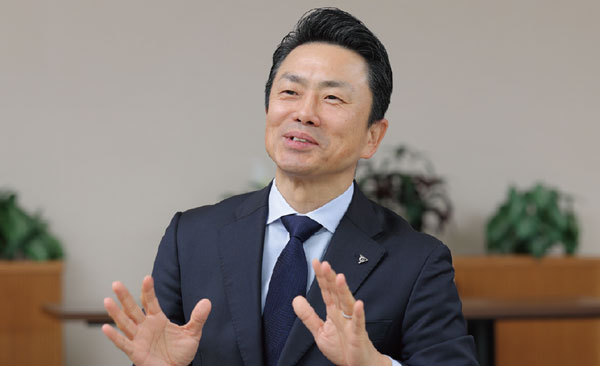
Hattori
Organizational change and human capital management are, in essence, attempts to redesign the organization by staking its future on a new direction.
That is precisely why it is important to assess what must not be lost during that process. Japanese companies, I feel, have lost what had originally been important amid the effort to streamline their businesses over the past two decades. However, caring about people is something that is, in essence, very rational.
What impressed me most in today’s discussion was your conviction that “our employees are exceptional.” Companies whose leaders continue to see their people in that way are, in my view, enduringly strong.
I look forward to seeing your company go about promoting human capital management after making the changes which should be made, and at the same time, clarifying the things that must not be lost.