The DUNLOP Group believes it is important to approach both individuals and organizations to improve human resource performance. As measures for individual employees, we support career autonomy and provide an environment where they can improve their skills in line with their career visions. As measures to enhance the organizational culture, we conduct surveys to visualize the actual state of the organizational culture and support each organization in identifying its issues and promoting initiatives to resolve them.
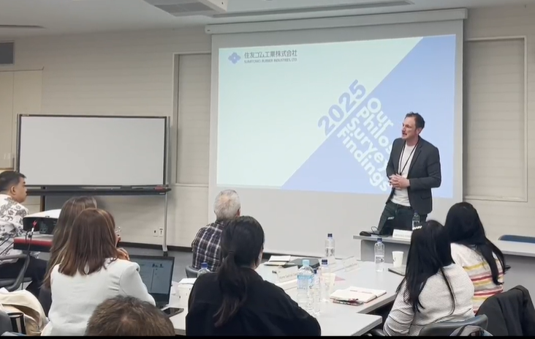
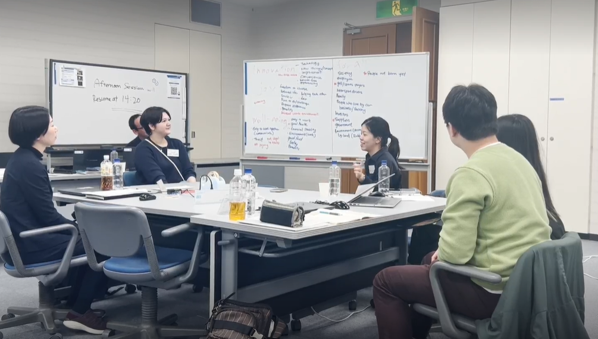
Since formulating “Our Philosophy” in 2020, our group has been advancing initiatives to embed it among employees. To facilitate this embedding, we have divided the penetration level of “Our Philosophy” into four phases: “Awareness,” “Understanding,” “Empathy,” and “Practice.” We are implementing measures tailored to the specific circumstances and penetration level of each area, including administrative departments, production departments, overseas bases, and domestic affiliates.In 2025, we conducted a survey to assess the level of understanding of Our Philosophy across all overseas locations as a follow-up initiative. Subsequently, we conducted interviews to gather qualitative feedback on factors hindering understanding and the types of support needed. To further enhance understanding, we held Our Philosophy workshops specifically for overseas locations. Moving forward, we will further engage all global employees with Our Philosophy through regular online workshops and discussion groups facilitated via the “Global HR Hub” communication channel for HR personnel at domestic and international locations, as well as by providing implementation tools.
The annual behavioral evaluations used in the appraisal system are based on items rooted in the three core values of the Sumitomo Rubber WAY (the values cherished by every Sumitomo Rubber Group employee): “Strive for trust and reliability,” “Take on challenges,” and “Respect one another.” Similarly, the questions in the 360-degree feedback are also grounded in these values, ensuring that both those giving and receiving feedback are constantly mindful of the behaviors expected.
At key junctures in life and professional careers, we conduct career vision training tailored to each age group. We promote employee career autonomy and advance talent development by encouraging proactive career building and skill enhancement.
We have prepared a “Career Development Sheet” within our HR system that allows employees to take stock of their past experiences and skills, then envision their desired future state. Employees fill this out individually and utilize it during their 1-on-1 meetings with their managers.
This system allows employees to express their desired job responsibilities and transfer destinations to Human Resources based on their mid-to-long-term career aspirations. By implementing placements that respect each employee's career goals, it aims to foster their growth, enhance engagement, and invigorate internal rotation. Transfers resulting from this system are steadily increasing.
This system allows employees to apply for cross-departmental internal projects while remaining assigned to their current department. Employees can challenge themselves with work different from their regular duties, while the project-leading departments can gather diverse talent from outside their own units.
This is a system where departments collaborate to exchange personnel for a set period. It aims to cultivate individuals who possess broad experience and perspectives, serving as bridges between departments.
We have established a system where employees can consult with in-house career consultants who hold national qualifications, thereby supporting their career development.
This competition began in 2009, with employees selected from domestic and overseas plants competing in manufacturing and equipment maintenance skills to achieve the goals of “skill transfer” and “motivation enhancement.” It covers six processes including molding, machine maintenance, vulcanization, and inspection, selecting one process each time for the technical competition.
The 23rd competition was held in 2025 at the Shirakawa Plant and Shirakawa Training Center in Fukushima Prefecture. This time, representatives selected from nine domestic and overseas tire plants gathered to compete in the tooling process (mold maintenance) category. Technicians from overseas plants also achieved top rankings, significantly contributing to the enhancement of global skill levels and motivation. This initiative plays a crucial role in elevating manufacturing capabilities and promoting human resource development.
As our business continues to globalize, we are actively pursuing initiatives to enhance English proficiency and foster cross-cultural understanding. Our new employee training includes global mindset training, designed to deepen understanding of global talent and boost motivation for English learning. Additionally, we implement structured global talent development training for employees scheduled for overseas assignments within one to two years. Our “Overseas Assignment Personnel Training” provides specialized education in global mindset, cross-cultural understanding, global management, and leadership development to cultivate global talent capable of immediate impact upon overseas assignment. Furthermore, to support the increasing opportunities for English usage, we provide ongoing language improvement support for necessary employees. This includes English conversation training by foreign national employees, participation in external language education programs, and the expansion of distance learning options.
To cultivate global talent, we introduced a trainee program in 2025 that dispatches young Japanese employees to overseas locations. Through short-term projects and problem-solving on-site, we aim to foster cross-cultural understanding and develop a global perspective. In 2025, two employees were dispatched to South Africa, with plans to expand to 10 employees annually starting in 2026. We also expect this initiative to further strengthen collaboration with our overseas locations.
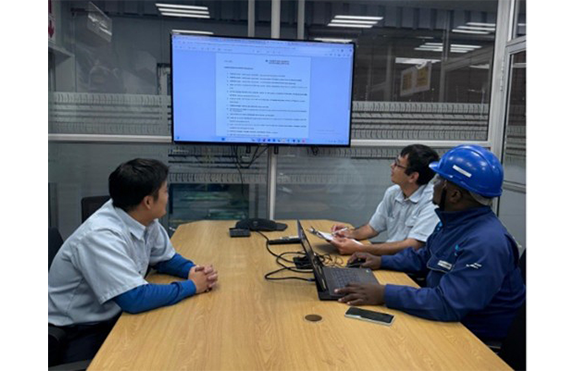
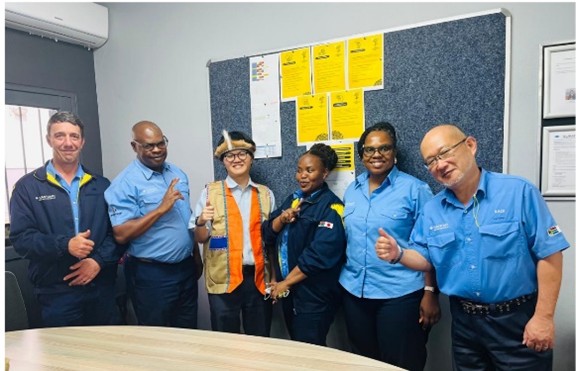
We are advancing the establishment of a globally unified HR infrastructure while strengthening the development of future executives and field leaders active at overseas locations. In 2025, we began accepting executive candidates selected from our Indonesian site at production facilities within Japan. They are gaining experience in production development and on-site process operations, cultivating the broad perspective and skills necessary for future leadership roles. Furthermore, our global talent exchange extends beyond executive candidates. We directly accept technical trainees from our Indonesian and Vietnamese sites within the group. Through hands-on skill acquisition at the production level, we are developing on-site leaders capable of leading teams.
Starting in fiscal year 2025, we transitioned from our traditional organizational culture survey to an “Engagement Survey” that utilizes external benchmarks. This allows us to objectively assess our company's position and strengthen our engagement improvement activities. Enhancing engagement is a crucial element in advancing human capital management, a pillar of our long-term management strategy. We will promote the creation of an organizational culture where employees find meaning in their work through initiatives like the “Future Factory Project,” which focuses on manufacturing sites, and departmental activities. Starting in 2026, we will further expand this approach to domestic and international group companies, actively working to improve engagement on a global scale.
To advance human capital management across the entire SRI Group, we established the Global HR Hub, composed of HR leaders from domestic and international locations. This hub is not merely an information dissemination platform; it has begun functioning as a space for exchanging information and fostering communication regarding human capital management initiatives within the SRI Group. Initially, to further embed Our Philosophy, we conducted a survey. Based on its results, the Hub functions as a mechanism to share and promote Good Practices. This is achieved through the collaboration between headquarters and overseas locations, as well as through two-way communication between domestic and international sites—exactly what overseas locations had requested. Moving forward, we aim to invigorate exchanges and increase utilization to establish global HR guidelines, implement engagement surveys, and execute subsequent initiatives.
Starting October 2025, we fundamentally revised our personnel system for general employees. We transitioned from the traditional competency-based qualification system to a role-based grading system, enabling fair compensation based on responsibilities and results. By integrating operational and planning/technical roles into a unified “Staff Course,” we expanded career options and reduced the number of hierarchical levels, facilitating earlier promotions. Furthermore, for higher-level grades, we changed the promotion/demotion system to one based on the roles undertaken, encouraging greater challenges. The evaluation system separates performance evaluation from behavioral evaluation, with behavioral evaluation reflected in regular pay raises. The pay raise system was changed to a salary range system, enhancing transparency. These revisions have created an environment where diverse talents can thrive fairly.
Every year, we conduct appointment reviews for managerial positions and deputy section chief appointments. Beyond evaluations by departments and supervisors, we implement standardized assessment reviews and interview reviews to ensure that managers and deputy section chiefs—who significantly influence employees—maintain a certain level of competency. We also administer personality trait assessments, helping individuals understand their own strengths and weaknesses to foster further growth.
Please refer to Promoting D&I Initiatives for information on various work arrangements and workplace environment.